In the bustling city of Mumbai, where dreams rise with the skyline, a young boy named Ratan Naval Tata grew up quietly under the shadow of the legendary Tata family. The world assumed he would naturally follow a path paved with privilege. But Ratan was different—he was gentle, observant, and deeply introspective. Life had already …
Home/Inspiration/The Extraordinary Journey of Ratan Tata: A Story of Heart, Humility & Heroic Leadership
The Extraordinary Journey of Ratan Tata: A Story of Heart, Humility & Heroic Leadership
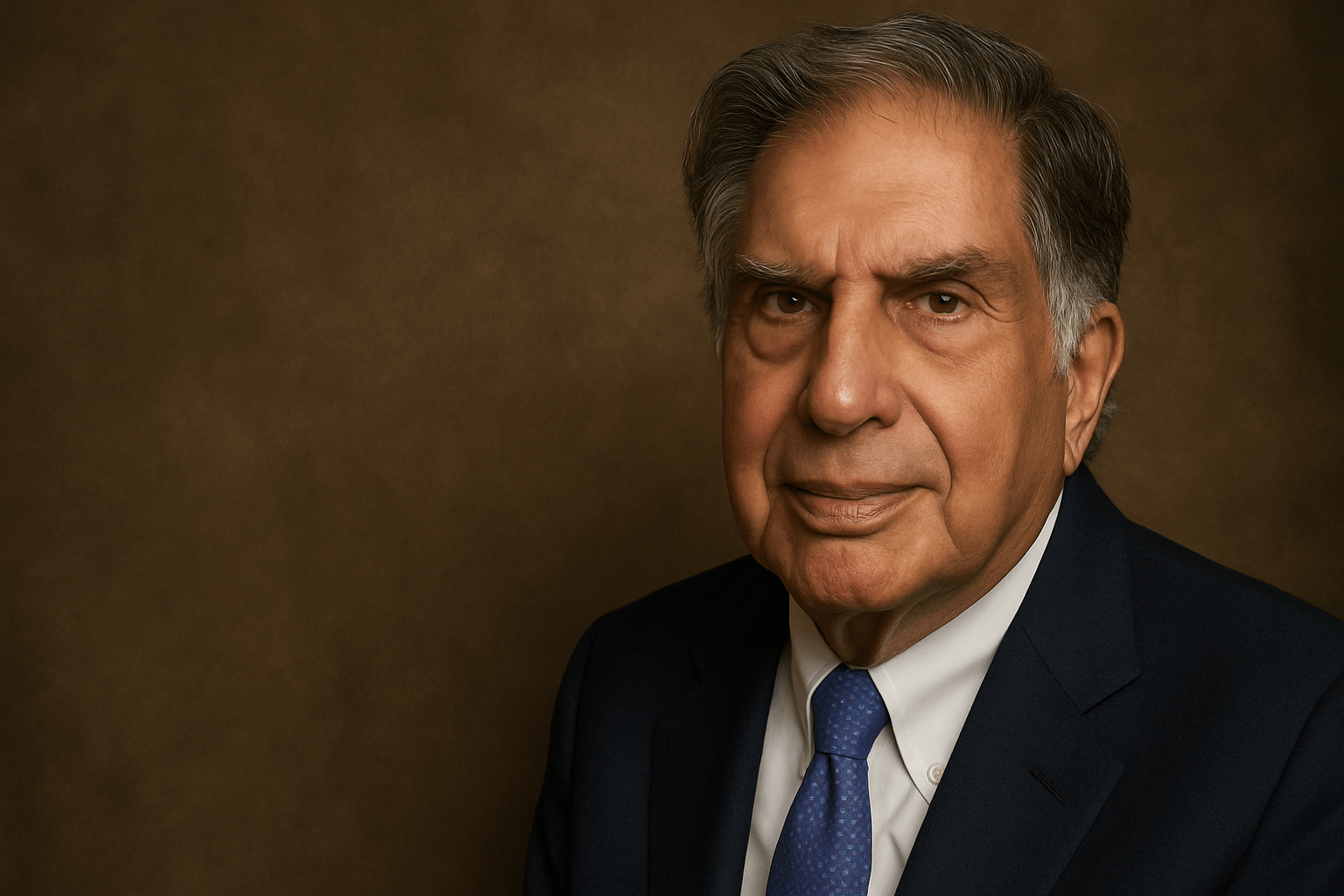
In the bustling city of Mumbai, where dreams rise with the skyline, a young boy named Ratan Naval Tata grew up quietly under the shadow of the legendary Tata family. The world assumed he would naturally follow a path paved with privilege. But Ratan was different—he was gentle, observant, and deeply introspective. Life had already tested him early: his parents separated when he was just ten, and he was raised by his grandmother, Lady Navajbai Tata, who instilled in him values of empathy, integrity, and resilience.
A Humble Beginning to a Giant Legacy
Ratan Tata’s journey in the Tata Group didn’t begin in plush boardrooms.
He started at the very bottom—working on the shop floors, wearing a hard hat, sweating alongside workers, learning not just machines but human stories. This humility later shaped him into a leader who commanded respect without ever demanding it.
When he took over the Tata Group in 1991, many doubted him. The conglomerate was fragmented with over 100 companies, and some seniors openly questioned his capabilities. But Ratan Tata didn’t respond with ego—he responded with action.
Vision That Looked Beyond Profit
Ratan Tata believed business is not just about making money—it is about creating impact.
Guided by this philosophy, he led the group into a new era:
- He unified the Tata companies under one brand.
- Encouraged innovation and global ambition.
- Acquired global giants like Jaguar Land Rover and Corus Steel, turning Tata into a respected global name.
But perhaps the most touching symbol of his heart came from an incident that occurred during monsoon rains in Mumbai.
The Birth of the Tata Nano: A Promise to the Common Indian
One day, Ratan Tata saw a family of four riding on a scooter—the father driving, the mother holding a young child, and another child squeezed in dangerously. That sight disturbed him deeply.
“I must find a safer solution for Indian families,” he thought.
This single moment sparked the idea of the Tata Nano, a car intended to be the world’s most affordable. Critics laughed. Experts doubted. Competitors mocked. But Ratan Tata persisted—not for profit, but for purpose.
And when the Nano finally rolled out, he fulfilled his promise:
a car for the common man.
Even though Nano faced commercial challenges later, its creation remains a testament to Ratan Tata’s courage, compassion, and vision.
Leadership Rooted in Humanity
What made Ratan Tata truly extraordinary wasn’t just his business success. It was his humanity.
- After the 26/11 Mumbai attacks, he visited every employee affected and every family who had lost someone. He didn’t send a representative—he personally sat with them, held their hands, and grieved with them.
- During COVID-19, Tata Trusts donated ₹1,500+ crore—the largest corporate donation in India—quietly, without any pomp.
- His countless acts of kindness—from funding needy students anonymously to adopting stray dogs at the Tata headquarters—show the depth of his character.
A Man Loved Not for His Wealth, But for His Heart
Ratan Tata became one of the most respected leaders in the world not because he inherited a legacy, but because he protected it, transformed it, and elevated it with grace.
He once said:
“I don’t believe in taking the right decisions. I take decisions and then make them right.”
This belief carried him through challenges, criticism, failures, and triumphs.
A Legacy of Inspiration
Today, Ratan Tata stands as a beacon of ethical leadership in a world often obsessed with shortcuts. His life teaches us:
- You don’t need arrogance to lead.
- You don’t need power to influence.
- You don’t need fame to inspire.
What you need is integrity, courage, and a heart that beats for others.
From a quiet boy raised by his grandmother to the architect of modern Indian industry, Ratan Tata’s story is not just a biography—it is a reminder that: